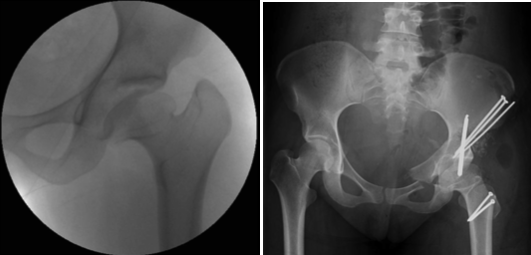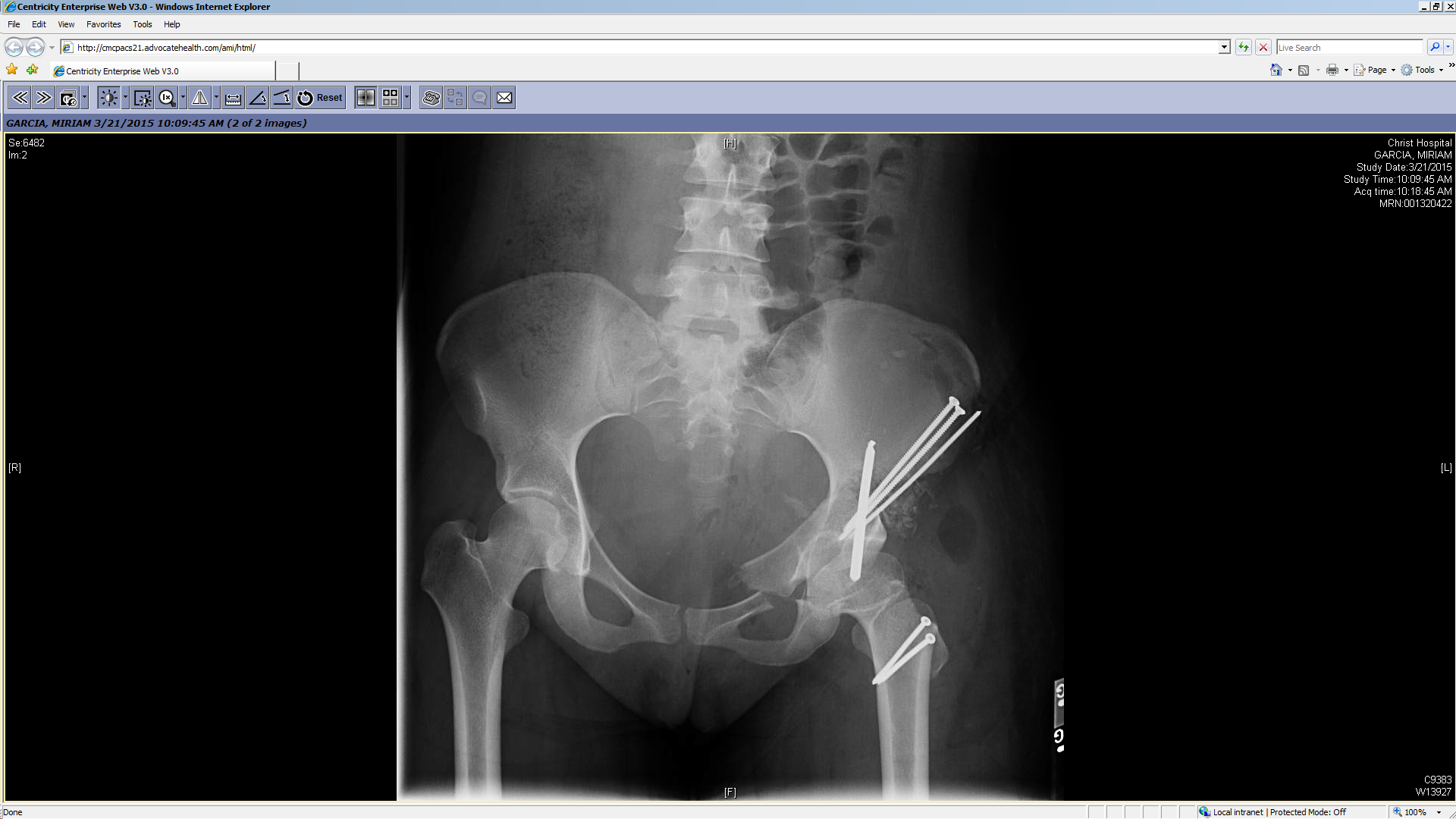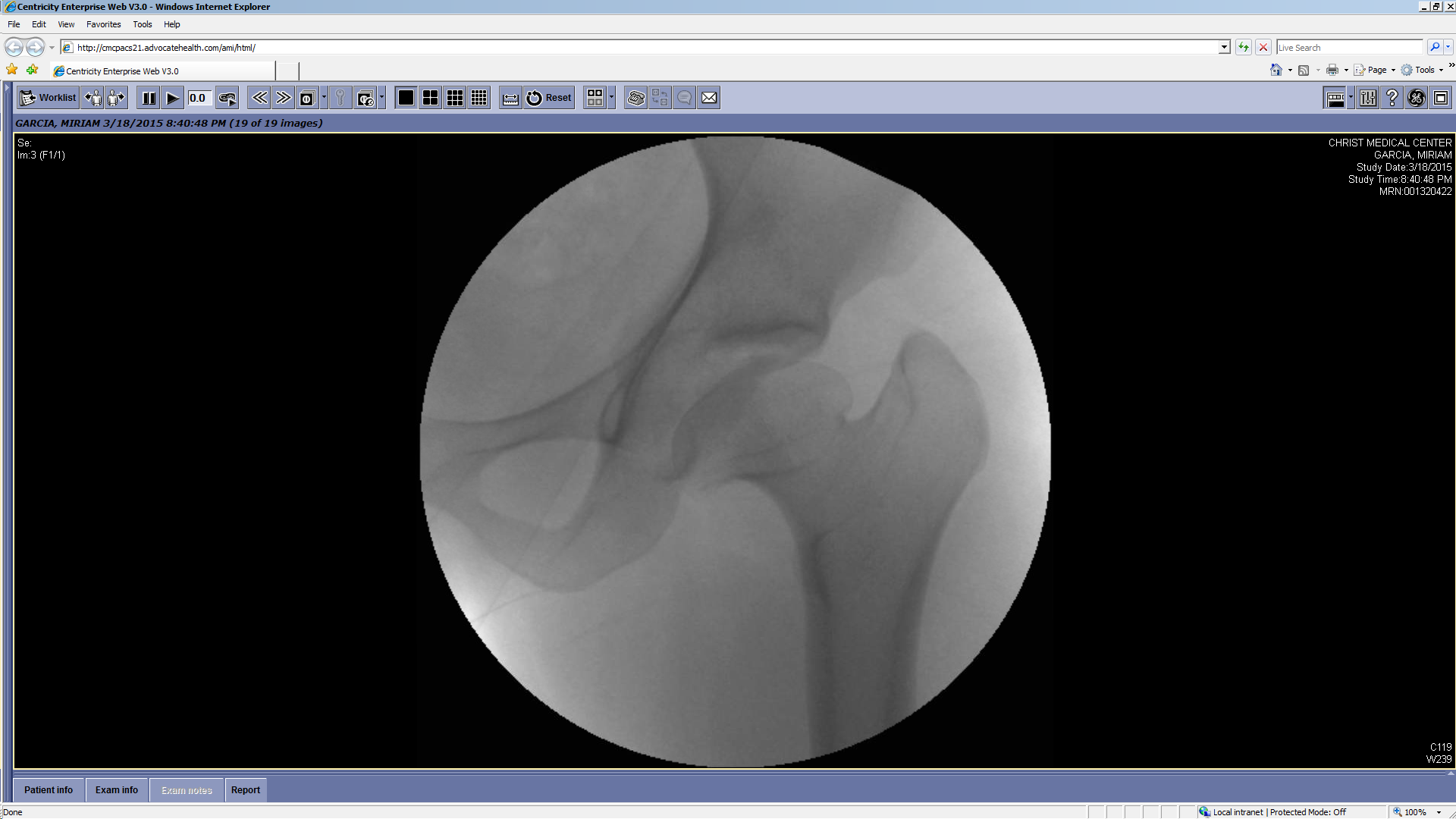
Perthes disease is a unique form of femoral head ischaemia that usually occurs in young children and less commonly in older children. Children with early Perthes are treated with splinting, containment surgery, and close follow-up. Once Perthes is healed, hip function depends on the final shape and size of the femoral head and the acetabulum. Containment with bracing or surgery maintains femoral head shape when performed in the earliest stages prophylactically. Once the head becomes deformed and subluxated in later stages, containment becomes remedial. After healing, prognosis is based almost entirely on bony morphology and cartilage space.
Morphological Variations After Healing
In healed Perthes, the cartilage space is usually normal but can occasionally narrow, portending a poor prognosis. 10% of cases develop an osteochondral defect.
| Structure | Possible Variations |
|---|---|
| Acetabulum | Normal, retroverted, bilobed, or lateral dysplasia with subluxation |
| Femoral head | Normal, enlarged but round (coxa magna), oval, mushroom-shaped, flat (coxa plana), or bilobed |
| Femoral neck | Normal or short (coxa breva) |
| Greater trochanter | Always normal growth but appears overgrown when capital physeal growth is inhibited |
Hip function and longevity depend on the collective effect of all morphological abnormalities.
Treatment
Treatment can be selective — identifying and treating the most likely cause of hip pain and dysfunction — or comprehensive, correcting all potential causes in one stage. Dr. Prasad Gourineni performs arthroscopic evaluation and correction of mild asphericity of the head or acetabular retroversion when the remaining morphological variations are mild and unlikely to cause symptoms. In more severe deformities, all abnormalities are corrected with the surgical dislocation approach, which allows head reshaping, neck lengthening, greater trochanter transfer, and acetabuloplasty.