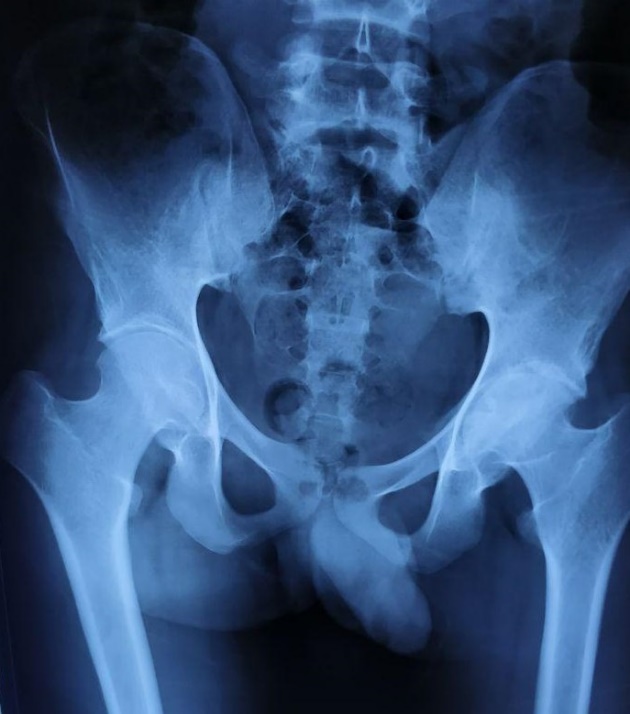
The fovea centralis is a naturally occurring defect in the femoral head where the ligamentum teres attaches. A branch of the obturator artery passes along the ligamentum to supply a small portion of the head around the fovea. The fovea normally faces the acetabular fossa and pulvinar fat, does not bear any weight, and does not contact the acetabular articular cartilage.
Coxa Valga and Caput Valgum
Coxa valga and caput valgum move the fovea upward into contact with the acetabular dome. Weight bearing on the fovea can cause pain from incongruity of the cartilage surfaces as well as from crushing of the ligamentum between the head and the acetabulum. Treatment is varus osteotomy to move the fovea medial to the sourcil.
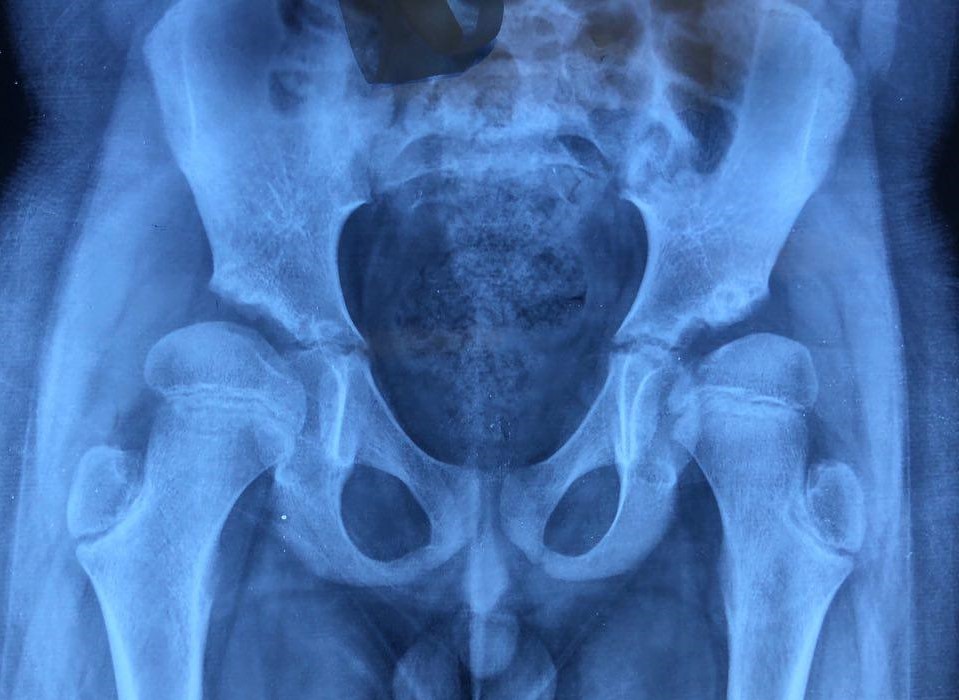
High Acetabular Fossa and Downsloping Sourcil
A high acetabular fossa (medial dysplasia) or a downsloping sourcil (reverse sourcil angle) can load a normally placed fovea against the usually non-weight-bearing acetabular fossa, crushing the ligamentum teres and causing medial osteoarthritis of the hip. Treatment is reverse periacetabular osteotomy before arthritis sets in.