
Gunshot wounds (GSW) are less common in India than they are in the USA. There are three types:
Types of Gunshot Wounds
| Type | Characteristics |
|---|---|
| High velocity | >1000 ft/sec (e.g. rifle) — small entry hole, large cavity of soft tissue damage, and a large exit hole |
| Low velocity | E.g. handgun / revolver — less soft tissue injury; the bullet is usually embedded in the tissue |
| Close-range shotgun | Extensive damage with a wide entry wound from multiple pellets and wadding, which are retained in the tissues |
Indications to Remove a Bullet
- Metal fragment with potential to rub on an articular surface
- Impeding tendon gliding (e.g. in the hand)
- Pressure on the spinal cord or nerves
- Exposure to body fluids such as joint fluid or CSF — lead can leach out and cause elevated blood lead levels
- Removal of shotgun wadding
Fracture Management
Fractures associated with GSWs are treated like closed fractures unless soft tissue necrosis or exposed bone requires debridement. Intravenous antibiotics for 24 hours are recommended to prevent infection. GSWs through the lower bowel are considered contaminated and require more aggressive management.
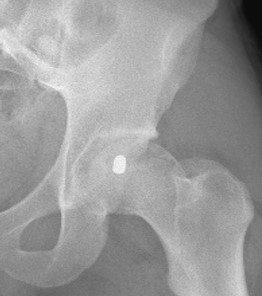
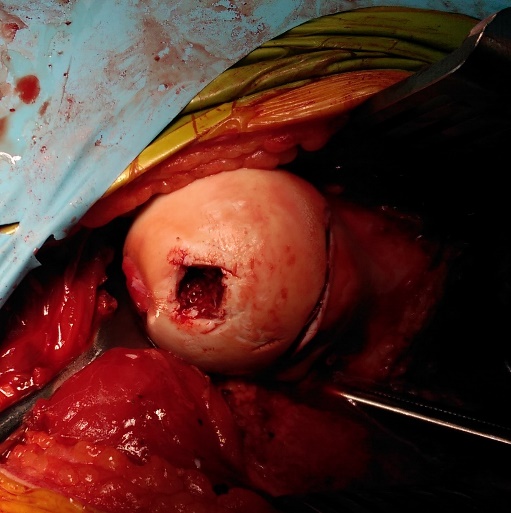
Retained bullet in the left femoral head removed with surgical dislocation and bone and cartilage grafting.