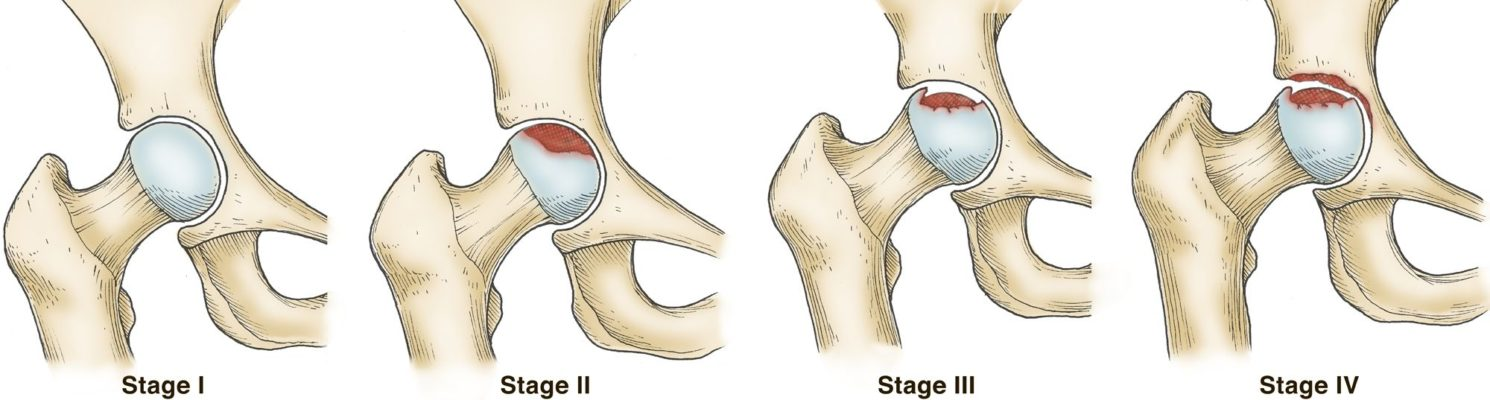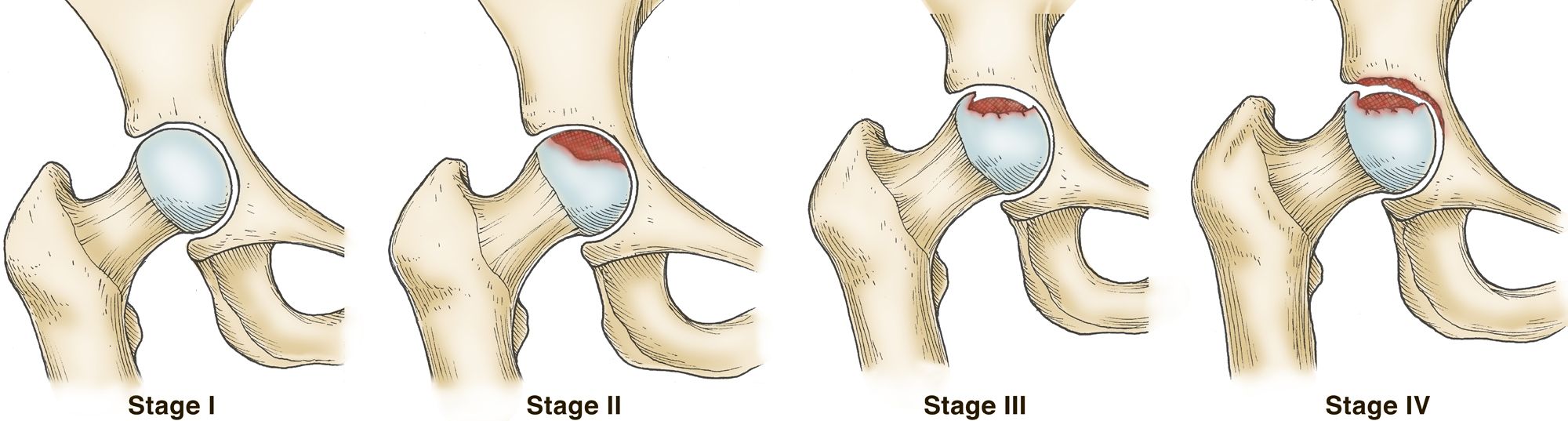
Avascular necrosis of the femoral head occurs from temporary interruption of the femoral head blood supply from multiple causes. The loss of blood supply to the head usually results in cell death. Blood supply grows back to the head ultimately and the body removes the old bone and forms new bone in the femoral head. The duration of the lack of blood supply that results in permanent damage to the head is unknown. As dead bone is removed the femoral head is weakened and vulnerable to deformation. The deformed head causes arthritis of the hip joint.
Protection of the femoral head from deformation can be attempted by decreasing physical activities, distracting the hip joint, and using various medications. The results of these approaches have not been very promising so far. Pain can be relieved by minimally invasive procedures and medications.
Bisphosphonates
Bisphosphonates seem to have a role in relieving pain and preventing femoral head deformation, but these medications are not approved by the FDA for use in avascular necrosis.
Once the femoral head deforms, restoration of the shape of the head is usually not successful even with the several surgical procedures that have been used. Arthritis of the hip joint is treated with hip salvage when pain and function are not acceptable.
Ficat Staging
| Stage | Findings |
|---|---|
| Stage I | No external or X-ray changes |
| Stage II | No external changes with X-ray signs |
| Stage III | Collapse of the femoral head |
| Stage IV | Arthritis sets in |