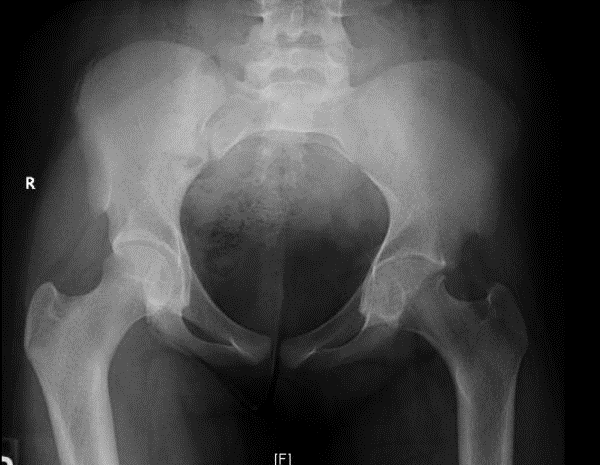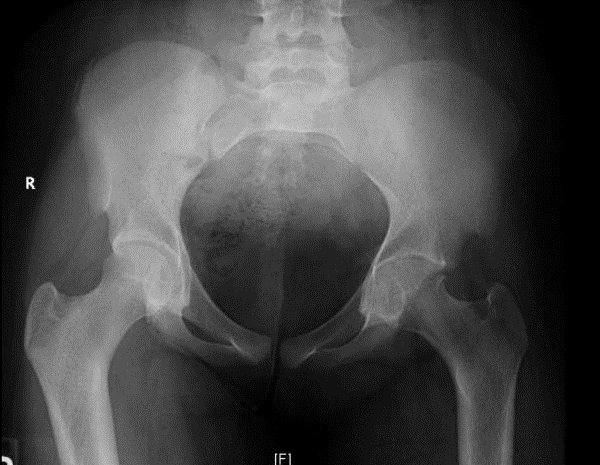
Chondrolysis is generalised cartilage loss that can happen spontaneously or after any injury or surgery. It can be directly related to intra-articular hardware or bone fragments, but often the cause is unknown. It was reported in slipped capital femoral epiphysis even without surgery or any treatment. It is probably from autoimmune destruction triggered by an initial insult in a predisposed person. Dr. Prasad Gourineni believes that idiopathic chondrolysis is often triggered by protrusio or a similar risk factor for impingement. It is more common in females and Black patients. There is no inflammation in the joint. Capsular thickening and stiffness can be variable.
No diagnostic tests are available. X-rays show uniform joint space narrowing with a classic appearance. MRI has not been useful in evaluating the cartilage in these cases until advanced cartilage loss occurs.
Spontaneous Recovery
More than half of affected hips improve their joint space spontaneously over several months to a few years. Recovered hips usually develop a ring osteophyte at the head-neck junction that is likely to cause impingement.
Chondrolysis does not have any proven treatment. Severe stiffness and contractures can be treated with soft tissue release to reposition the joint in better alignment.